Serving Mission Viejo for 30+ Years
Your roof represents one of the largest investments you’ll make in your home—typically $8,000-$30,000 depending on size and materials. For most Mission Viejo homeowners, asphalt shingles offer the optimal balance of performance, aesthetics, affordability, and longevity. But “asphalt shingles” isn’t a single product—it’s an entire category with dramatic differences in quality, cost, and lifespan that directly impact your home’s protection and your financial outcome.
Choose wrong, and you’ll spend $10,000 on a roof that fails in 12 years, forcing another expensive replacement when you’re not financially prepared. Choose right, and you’ll invest $15,000 in a roof that protects your home for 30+ years, increases property value, and delivers decades of worry-free performance.
This page exists to help you optimize your asphalt shingle investment for Mission Viejo’s specific climate conditions, architectural styles, and market realities. We’re not here to sell you the most expensive shingle or push unnecessary upgrades. We’re here to help you understand exactly what you’re buying, how different shingle types perform in Mission Viejo’s 283-sunny-day climate with Santa Ana winds and concentrated winter rainfall, and how to make the choice that delivers maximum value for your situation.
Approximately 80% of American homes have asphalt shingle roofs, and in Mission Viejo, that percentage is even higher. Asphalt shingles dominate residential roofing for compelling reasons that align perfectly with California homeowners’ needs and priorities.
Modern asphalt shingles consist of four primary components working together to create a waterproof, durable, and attractive roofing surface:
Fiberglass Base Mat: The foundation layer provides dimensional stability and strength. This woven fiberglass mat prevents shingles from stretching, warping, or deforming under thermal stress.
Asphalt Coating: High-grade asphalt saturates the base mat and creates the waterproof barrier. Premium shingles use modified asphalt formulations with polymers that improve flexibility, adhesion, and weather resistance.
Ceramic Granules: The visible top surface consists of colored ceramic or mineral granules embedded in the asphalt. These granules serve multiple functions: UV protection (preventing asphalt degradation from sun exposure), color and aesthetics, fire resistance (Class A rating), impact protection from hail and debris, and surface texture that creates traction and channels water.
Sealant Strip: An adhesive strip bonds each shingle to the one below it once heated by the sun, creating wind resistance and preventing shingle blow-offs during storms.
The quality, thickness, and formulation of each component determines a shingle’s performance, lifespan, and cost. Understanding these differences is key to optimizing your investment.
Mission Viejo’s climate (Mediterranean with hot, dry summers and mild, wet winters) creates specific roofing demands that asphalt shingles meet exceptionally well:
Not all asphalt shingles deliver equal performance or value. The three main categories—3-tab, architectural, and designer (luxury)—differ dramatically in construction, durability, aesthetics, and cost. Understanding these differences is essential for optimizing your investment.
Construction: 3-tab shingles are the simplest asphalt shingle design. They consist of a single layer of asphalt-coated fiberglass mat with three evenly spaced tabs (cutouts) that create the appearance of three separate shingles. This uniform, flat design minimizes material usage, keeping costs low.
Appearance: 3-tab shingles create a flat, uniform roofline with consistent horizontal lines. The tabs are identically sized and spaced, producing a clean, traditional look that some homeowners prefer for its simplicity. However, limited color options (many manufacturers are phasing out 3-tab lines) restrict customization.
Warranty: Typically 25-30 years prorated (meaning coverage decreases each year)
Cost: $4.00-$6.50 per square foot installed ($8,000-$13,000 for a typical 2,000 sq ft roof)
Advantages:
Disadvantages:
Best For Mission Viejo Homeowners Who:
Construction: Architectural shingles (also called dimensional or laminate shingles) feature multiple layers of asphalt bonded together, creating a thicker, heavier, more durable product. The laminated construction produces a dimensional, textured appearance with random patterns that mimic premium roofing materials like wood shakes or slate.
Appearance: Architectural shingles provide depth and dimension to your roofline. The layered construction creates shadow lines and varied textures that dramatically enhance curb appeal compared to flat 3-tab shingles. Wide color selections (typically 20-40 options per manufacturer) allow precise matching to your home’s exterior palette.
Performance Characteristics:
Warranty: 30-50 year warranties, often “lifetime” limited warranties (non-prorated for first 10-15 years)
Cost: $5.50-$9.00 per square foot installed ($11,000-$18,000 for a typical 2,000 sq ft roof)
Advantages:
Disadvantages:
Best For Mission Viejo Homeowners Who:
This is the sweet spot for most Mission Viejo homeowners—delivering 80% of premium performance at 50-60% of premium cost.
Construction: Designer shingles represent the pinnacle of asphalt shingle engineering. They feature the thickest construction with multiple laminated layers, premium asphalt formulations, enhanced granules, and sophisticated profiles designed to closely mimic natural slate or cedar shake roofs. Each shingle is larger and heavier than standard architectural shingles.
Appearance: Designer shingles deliver dramatic curb appeal with rich, varied textures and colors that create high-end aesthetics. The random patterns, varied tab sizes, and deep shadow lines produce the most authentic slate or shake appearance possible with asphalt products. Colors tend toward sophisticated, muted tones that complement upscale architectural styles.
Performance Characteristics:
Warranty: 50 year to “lifetime” limited warranties with extensive non-prorated periods
Cost: $8.00-$12.00+ per square foot installed ($16,000-$24,000+ for a typical 2,000 sq ft roof)
Advantages:
Disadvantages:
Mission Viejo’s Mediterranean climate creates specific performance demands that influence which asphalt shingle type delivers optimal value for your situation.
Mission Viejo’s abundant sunshine means roofs endure intense ultraviolet radiation year-round. UV exposure gradually degrades asphalt and causes granule loss—the primary aging mechanism for asphalt shingles.
Our recommendation: In Mission Viejo’s high-UV environment, the enhanced granule formulations in architectural and designer shingles justify their higher cost through longer lifespan and better appearance retention.
Mission Viejo temperatures vary dramatically between day and night, especially during spring and fall. Roof surfaces heat to $140-160^\circ\text{F}$ during summer days then cool to $60-70^\circ\text{F}$ at night—an $80-100^\circ\text{F}$ swing. This thermal cycling causes expansion and contraction that stresses roofing materials.
Our recommendation: All asphalt shingles handle Mission Viejo’s thermal cycling adequately when properly installed, but architectural and designer shingles’ enhanced materials provide a larger margin of safety.
Several times annually, Santa Ana wind events bring sustained high winds from the east/northeast. These dry, warm winds create extreme uplift forces on roofing, especially on roof edges, ridges, hips, and areas around chimneys and valleys.
Our recommendation: Given Mission Viejo’s regular Santa Ana wind exposure, architectural shingles’ 110-130 mph wind ratings provide appropriate protection. 3-tab shingles’ 60-70 mph ratings are insufficient for confident performance.
Mission Viejo’s rainfall arrives in concentrated winter storms rather than distributed throughout the year. This pattern means intense rainfall events where gutters overflow, water sheets across roofs, and drainage systems are stressed.
Our recommendation: Shingle type matters less for rain performance than proper installation with quality underlayment and flashing. Any asphalt shingle performs well in Mission Viejo’s rainfall when correctly installed.
Mission Viejo’s low humidity (40-60% typically) and rare freezing temperatures (virtually none below $32^\circ\text{F}$) create favorable conditions for asphalt shingles.
Our recommendation: Mission Viejo’s climate is actually ideal for asphalt shingles. The main threats are UV exposure and Santa Ana winds—both addressed by choosing architectural or designer shingles over 3-tab.
Understanding total cost requires looking beyond initial installation price to lifetime value, which includes lifespan, maintenance costs, and resale impact.
For a typical 2,000 square foot Mission Viejo home (20 squares of roofing material):
| Shingle Type | Material Cost (20 Squares) | Labor Cost (20 Squares) | Additional Components | Total Project Cost | Per Square Foot |
| 3-Tab Shingles | $1,600 – $2,600 | $4,000 – $5,600 | $2,000 – $3,000 | $8,000 – $11,500 | $4.00 – $5.75 |
| Architectural Shingles | $2,400 – $4,400 | $4,400 – $6,400 | $2,200 – $3,400 | $11,000 – $18,000 | $5.50 – $9.00 |
| Designer (Luxury) Shingles | $5,000 – $8,000+ | $5,600 – $7,600 | $2,500 – $4,000 | $16,000 – $25,000+ | $8.00 – $12.50+ |
Smart homeowners evaluate cost per year of service, not just upfront price. This analysis reveals architectural shingles’ superior value:
| Shingle Type | Installation Cost (Mid-Range) | Realistic Lifespan | Cost Per Year | 30-Year Total Cost (Accounting for Inflation) |
| 3-Tab Shingles | $10,000 | 15 years | $667 | $22,000 |
| Architectural Shingles | $14,500 | 28 years | $518 | $17,000 |
| Designer Shingles | $20,000 | 38 years | $526 | $20,000 |
A new roof increases Mission Viejo home values, but the magnitude depends on shingle type:
The “best” asphalt shingle depends on your specific circumstances. Here’s our decision framework for Mission Viejo homeowners:
For the majority of Mission Viejo homeowners, Architectural Shingles represent the optimal choice—delivering 90% of designer shingle benefits at 60–70% of the cost.
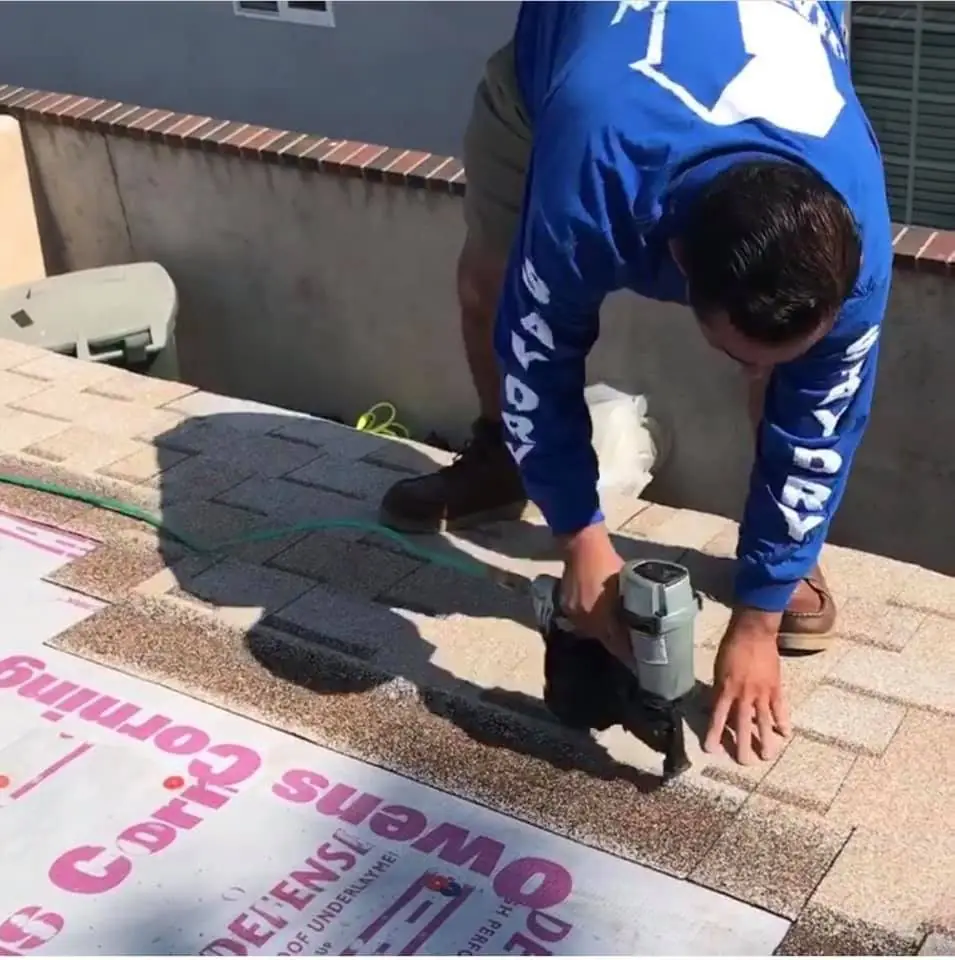
Understanding our installation process helps you appreciate the quality and attention to detail that separates professional roofing from cut-rate alternatives.
Would you like to know more about the different types of underlayment (like synthetic vs. felt) or the benefits of proper attic ventilation?
Proper installation is just the beginning. These maintenance practices help you achieve maximum lifespan from your investment.
Lifespan depends primarily on shingle quality and installation: 3-tab shingles: 15-20 years (often 12-15 years in practice), architectural shingles: 25-30 years (can reach 35+ with proper maintenance), designer shingles: 30-40 years (potential for 50+ in optimal conditions). Mission Viejo's climate is actually favorable for asphalt shingles—no freeze-thaw cycling, minimal moisture, and moderate temperatures extend lifespan compared to harsh climates. The main aging factors here are UV exposure (283 sunny days) and occasional Santa Ana winds. Proper installation with quality underlayment and adequate ventilation are essential for reaching maximum lifespan. Homes with poor ventilation (overheated attics) or improper installation commonly see 20-30% shorter lifespans. We've seen 3-tab roofs fail in 10-12 years due to poor ventilation, while properly installed architectural shingles regularly exceed 30 years.
Color selection balances aesthetics, heat absorption, and fading considerations. Lighter colors (tan, gray, light brown) reflect more heat, keeping attics cooler and extending shingle lifespan. They also show less fading from UV exposure. Darker colors (dark brown, charcoal, black) absorb more heat, increasing attic temperatures which can reduce shingle lifespan by 10-15%. However, they often provide better curb appeal and hide dirt better. Medium tones (medium gray, weathered wood, driftwood) offer the best balance—attractive appearance, moderate heat absorption, minimal visible fading. For Mission Viejo's climate, we generally recommend lighter to medium tones. However, aesthetic considerations often outweigh technical factors—your roof is highly visible and impacts curb appeal significantly. Choose a color you love that complements your home's exterior, then ensure adequate attic ventilation to mitigate heat absorption concerns. Popular Mission Viejo choices: Weathered Wood, Driftwood, Mission Brown, Pewter Gray, and Aged Cedar tones that complement the area's Spanish mission architectural style.
This depends on current roof condition and timing. Replace if: Your roof is 18+ years old (buyers will assume replacement is imminent and negotiate accordingly), visible damage is present (missing shingles, obvious wear, staining), you're selling a higher-value home ($800K+) where buyers expect updated components, or comparable homes in your neighborhood have newer roofs. Don't replace if: Your roof is less than 12 years old and in good condition, you're in a seller's market where homes sell quickly regardless of roof age, or your home is priced below market (buyers may be planning renovations anyway). Middle ground: If your roof is 13-18 years old, get a professional assessment. We can provide a "roof certification" documenting remaining lifespan and condition. This costs $200-$400 but can satisfy buyer concerns without full replacement. Generally, a new architectural shingle roof returns 75-85% of its cost in increased home value. If you're selling within 6-12 months of replacement, you'll recover most of the investment through faster sale and higher price.
Technically yes, but we strongly recommend against it (and California building codes prohibit more than two layers total). Problems with overlaying: You can't inspect roof decking for rot or damage, weight doubles (concerns for older homes with marginal roof structures), new shingles conform to the uneven surface below creating a wavy appearance, heat buildup increases (old shingles trap heat against new shingles), lifespan of new shingles is reduced by 20-30%, most manufacturer warranties require complete tear-off, and resale impact is negative (buyers prefer proper tear-off replacements). The cost savings of overlay ($1,000-$2,000) doesn't justify the compromises. We always recommend complete tear-off to bare decking for maximum lifespan and proper installation.
Watch for these quality indicators: Proper permits pulled and inspections scheduled, complete tear-off to bare decking (no overlay), synthetic underlayment rather than old felt paper, ice and water shield installed in valleys and around penetrations, drip edge installed around entire perimeter before underlayment, shingles aligned straight (use chalk lines for consistent courses), correct nail placement and count (4-6 nails per shingle in specified locations), starter strips installed on all eaves and rakes, step flashing at wall intersections (not just caulk), proper valley installation (metal or woven depending on manufacturer recommendations), ridge cap shingles (not field shingles cut and installed), and thorough cleanup including magnetic nail sweeps. Red flags: Pressure to skip permits, rushing through work in 1 day (proper installations take 2-4 days for typical homes), leaving debris overnight between work days, using felt paper instead of synthetic underlayment, installing without starter strips or proper flashing, and reluctance to allow you to inspect work or ask questions.
Moderately, through several mechanisms: Reflective shingles: Light-colored architectural or designer shingles with reflective granules can reduce attic temperatures by 10-15°F, lowering cooling costs by 10-15% during summer. Proper ventilation: New roof installations include upgraded ventilation (ridge vents, soffit vents) that reduces attic heat buildup. Cooler attics mean less heat transfer to living spaces. Better sealing: New underlayment and proper flashing eliminate air leaks that compromise insulation effectiveness. Realistic expectations: A new asphalt shingle roof typically saves $15-$40 monthly on summer cooling costs for an average Mission Viejo home. Annual savings of $180-$480 aren't insignificant but won't offset roof cost quickly. The primary benefits are protection, longevity, and property value—energy savings are a bonus. For maximum energy benefit, combine new roofing with attic insulation upgrades (if currently under-insulated) and radiant barrier installation.
Most Mission Viejo neighborhoods have HOAs, and most require approval for exterior changes including roofing. Typical HOA requirements: Advance notice (typically 30-60 days before work begins), architectural application with material samples and color charts, approval before ordering materials or scheduling work, and compliance with CC&Rs regarding materials, colors, and appearance. Good news: Asphalt shingles are almost universally approved because they're standard residential roofing materials. HOAs rarely reject asphalt shingle applications unless colors are dramatically out of character for the neighborhood. Process: We help you gather required documentation (material specs, color samples, contractor license info), submit applications on your behalf if requested, and coordinate work timing with HOA requirements. Most approvals take 2-4 weeks. Plan ahead to avoid delays. Exception: Replacing "like with like" (same color and material) often doesn't require approval, but check your specific HOA documents to confirm.
You receive two separate warranties: Manufacturer Material Warranty covers defects in the shingles themselves: 3-tab: 25-30 year prorated, architectural: 30-50 year "lifetime" (actually 40-50 years), designer: 50 year to "lifetime" warranties. Important: "Lifetime" means the product's expected lifespan (typically defined as 40-50 years), not your lifetime or the home's lifetime. Warranty coverage is prorated—after the non-prorated period (typically 10-15 years), you receive decreasing credit toward replacement. Example: A 50-year warranty might be non-prorated for 10 years, then prorated for remaining 40 years. At year 30, you might receive 40% credit (20 years remaining ÷ 50 year total). Material warranties cover shingle failure but NOT labor costs to replace them. Installation Workmanship Warranty covers installation quality: We provide a 5-year workmanship warranty covering all installation-related issues (leaks, blow-offs, flashing failures). This covers labor costs the manufacturer warranty doesn't. Extended workmanship warranties (up to 10 years) are available on premium installations.
Mission Viejo's climate allows year-round roofing, but some periods are optimal: Best: Spring (March-May) and Fall (September-November): Moderate temperatures make work comfortable, lower rainfall risk (though spring can be wet), and contractors are moderately busy (availability good, prices competitive). Good: Summer (June-August): Minimal rain risk, excellent for installation, but hot temperatures (100°F+ some days), and peak season means higher demand and prices. Acceptable: Winter (December-February): Lowest contractor demand (best pricing), but rainfall risk requires flexible scheduling and work may be delayed by storms. Avoid during active rain but between storms is fine. Our recommendation: If your roof is failing and needs immediate replacement, do it whenever you notice problems—don't wait for "optimal" season. Active leaks cause far more damage than the minor inconveniences of off-season work. If you're planning ahead, schedule for spring or fall when weather is ideal and contractor availability is good.
Whether you need emergency replacement due to storm damage or you’re proactively upgrading an aging roof, Mission Viejo Roofing provides the expertise, quality materials, and meticulous installation that delivers decades of worry-free performance.
We don’t push unnecessary upgrades or pressure you toward expensive materials that don’t fit your situation. We provide honest assessments, clear explanations of your options, and straightforward pricing that allows informed decision-making. We install every roof as if it were protecting our own families—because we know your home is your most valuable asset.
Three-generation roofing expertise. Licensed, bonded, and insured (C-39). Meticulous attention to detail. Transparent pricing with no hidden costs. Five-year workmanship warranty. Complete cleanup and site restoration. Building permits and inspections handled.
Call Mission Viejo Roofing today to schedule your free roof inspection and estimate. We’ll assess your current roof condition, discuss shingle options that optimize value for your situation, provide clear pricing, and answer all your questions.
Mission Viejo Roofing – Licensed, Bonded & Insured (C-39)
📞 Phone: (949)-528-7663
✉️ Email: ocstaydryroofing@yahoo.com
📍 Address: 26040 Acero Suite 202 Mission Viejo CA 92691
Your home deserves a roof that delivers maximum protection, curb appeal, and value. Let’s make it happen.
CITATIONS:
Join our mailing list to receive updates, roofing tips, and special offers from our trusted team.
Keep your home protected with the latest from Mission Viejo Roofing.
Thank you! We need your help. Would you share your experience on one of these sites?
If you have concerns you wish to address privately