The Hidden Damage That Costs Mission Viejo Homeowners Thousands
Your fascia boards are the unsung heroes of your roofing system—until they fail. These horizontal boards running along your roofline serve three critical functions: they support your gutters, seal your attic from pests and weather, and protect your roof’s edge from water infiltration. When fascia boards fail in Mission Viejo, the damage cascades quickly: gutters sag and pull away, water infiltrates behind your roofline, roof decking begins to rot, and what started as a $400 repair becomes a $4,000+ emergency replacement involving your roof structure, soffits, and gutter system.
In Mission Viejo’s climate—with 283 sunny days annually, temperatures ranging from 47°F to $82°F, and concentrated rainfall during winter months—fascia boards face unique stressors. The intense UV exposure during our long summers breaks down paint and sealants faster than in cooler climates. When winter rains arrive, any compromised fascia allows water to penetrate, creating rot that spreads rapidly through the wood. This wet-dry cycle, combined with our occasional Santa Ana winds and the architectural preference for Spanish mission-style homes with exposed rafters and decorative fascia, makes fascia board maintenance particularly important for Mission Viejo homeowners.
The average Mission Viejo home built in 1980 likely has original wooden fascia that’s now over 40 years old—well beyond the typical 20–30 year lifespan for untreated wood in our climate. If your home falls into this category and you haven’t replaced your fascia boards, you’re living on borrowed time. The good news? Early detection and professional repair can extend your fascia’s life significantly and prevent the costly cascade of damage that comes from neglect.
Understanding Fascia Boards: What They Are and Why They Matter
Fascia boards are the horizontal planks that run along the lower edge of your roof, connecting to the ends of your rafters or trusses. In Mission Viejo, these boards typically measure 2×6 or 2×8 inches and extend around the entire perimeter of your roofline. They serve as the mounting surface for your gutters and create a finished edge that protects your roof’s vulnerable overhang area.
The Three Critical Functions of Fascia Boards:
Structural Support for Gutters Your gutter system attaches directly to the fascia boards, which means these boards must be strong enough to support the weight of the gutters themselves plus the water they carry during rainstorms. A standard 5-inch gutter filled with water and debris can weigh 20+ pounds per linear foot. If your fascia boards rot or weaken, they can no longer support this load, leading to sagging gutters that don’t drain properly and eventually pull completely away from your home.
Weather Barrier and Attic Seal Fascia boards seal the gap between your roof edge and your home’s exterior walls, preventing rain, wind-driven moisture, and even Santa Ana wind debris from entering your attic space. Without intact fascia, water can run directly into your attic along the rafters, causing insulation damage, mold growth, and rot that spreads into your roof decking and structural framing.
Pest Prevention The soffit (the underside of your roof overhang) and fascia work together to keep birds, bats, squirrels, rats, and insects from entering your attic. Damaged or missing fascia creates entry points for these pests, and once they establish nests or colonies in your attic, removal becomes expensive and the damage they cause to insulation, wiring, and structural wood compounds your problems. In Mission Viejo, the architectural style of many homes features exposed rafter tails and decorative fascia boards that are prominently visible from the street. This means damaged fascia doesn’t just create structural problems—it also significantly impacts your home’s curb appeal and property value. Buyers and appraisers notice peeling paint, sagging gutters, and rotted fascia, often using these visible issues to negotiate lower prices or request extensive repairs before closing.
The Science of Fascia Damage: Why Mission Viejo’s Climate Accelerates Deterioration
Understanding how fascia boards fail helps explain why prompt repair is so important. In Mission Viejo’s specific climate zone, several factors work together to damage fascia faster than in many other regions:
UV Radiation and Thermal Cycling
With 283 sunny days per year and summer temperatures regularly reaching $82^\circ\text{F}+$, Mission Viejo fascia boards endure intense ultraviolet radiation. UV light breaks down the lignin in wood fibers, causing surface degradation, checking (small cracks), and rapid deterioration of paint and sealants.
The daily thermal cycle—hot days and cooler nights—causes wood to expand and contract repeatedly, opening microscopic cracks that allow moisture penetration.
Concentrated Winter Rainfall
Mission Viejo receives approximately 14 inches of rain annually, but this precipitation is concentrated in just 37 days, primarily between November and March.
This pattern means intense rainfall events where gutters overflow, water sheets across the roof, and fascia boards are exposed to heavy moisture for extended periods.
If your fascia has any compromised areas—cracked paint, checking, or small splits—this concentrated exposure allows water to penetrate deep into the wood.
Dry Rot Fungi in Southern California
The specific moisture and temperature ranges in Mission Viejo create ideal conditions for brown rot fungi, commonly called “dry rot” because the affected wood becomes dry, brittle, and crumbly.
These fungi require four conditions to thrive: wood cellulose, oxygen, moisture content between $20\%$-$30\%$, and temperatures between $50^\circ\text{F}$-$90^\circ\text{F}$.
Mission Viejo’s winter months provide exactly these conditions when rain-soaked fascia doesn’t dry completely between storm events. The fungi secrete enzymes that break down cellulose in the wood, creating a progressive decay that spreads rapidly once established.
Termite and Carpenter Ant Activity
Southern California’s subterranean termites and carpenter ants actively seek out moisture-damaged wood. Fascia boards that have developed even minor rot become attractive targets for these insects.
Termites can travel through shrubs, trees, and soil to reach compromised fascia, and once they establish colonies, they hollow out the wood from the inside while leaving a thin outer shell that appears intact from ground level. By the time you notice the damage, extensive replacement may be necessary.
Inadequate Roof Overhang Protection
Many Mission Viejo homes built in the 1980s and earlier have minimal roof overhangs—sometimes just 12–18 inches.
While this architectural style is common in Spanish mission designs, it means fascia boards receive direct rain exposure during storms, especially when wind drives rain horizontally.
Homes with deeper overhangs (24+ inches) provide better protection for fascia boards, allowing them to shed water more effectively.
The Real Cost of Delayed Fascia Repairs
Many Mission Viejo homeowners postpone fascia repairs because the damage seems cosmetic—peeling paint, minor discoloration, or small cracks don’t appear urgent compared to obvious problems like roof leaks or broken gutters. However, fascia damage follows a predictable and accelerating progression that makes early intervention far more cost-effective:
Paint peeling or chalking, minor checking in wood, small cracks at joints or nail holes.
At this stage, professional repairs involve sanding damaged areas, applying wood hardener to any soft spots, sealing all joints and nail holes, prime-coating, and finish painting with UV-resistant exterior paint.
This work preserves the existing fascia and extends its life by 10–15 years. Most homeowners can address this stage for $300–$800 depending on linear footage.
Stage 2: Localized Rot (Repair Cost: $800–$2,500)
Soft spots when pressed, dark discoloration, visible wood decay in specific areas (often near gutter downspouts or at end joints).
This stage requires cutting out and replacing damaged sections—typically 4–8 foot segments.
The contractor must match the wood species and dimensions, properly flash the joints, integrate the new section with existing fascia, and finish paint everything to match. Cost typically runs $800–$2,500 depending on extent and accessibility.
Stage 3: Extensive Rot with Underlying Damage (Repair Cost: $2,500–$6,000)
Fascia crumbling or pulling away, gutters sagging noticeably, moisture stains on exterior walls below fascia, evidence of roof decking damage at the edge.
At this stage, fascia boards must be completely replaced along affected sections (often 20–40+ linear feet), roof decking and rafter tails inspected and repaired if water has penetrated, gutters temporarily removed and reinstalled, and potentially soffit boards replaced if damage has spread.
Fascia boards failed completely, gutters detached or severely damaged, visible roof sag at the edge, water damage inside the home (attic, walls, ceiling), mold growth in attic or walls, pest infestation established.
This stage requires comprehensive repairs: complete fascia replacement around the affected roofline, rafter tail and roof decking replacement where rot has spread, new gutter installation, soffit and trim replacement, mold remediation if necessary, pest exclusion and cleanup, and interior repairs to walls or ceilings.
Total costs easily exceed $6,000 and can reach $15,000+ depending on the extent of structural damage.
A real-world example: A Mission Viejo homeowner noticed peeling paint on the fascia near their front entrance. Concerned about curb appeal before hosting family for the holidays, they scheduled a free inspection. Our assessment revealed surface deterioration (Stage 1) on the visible front section but extensive rot (Stage 3) on the south side where intense sun exposure had accelerated decay. Because they caught the problem before winter rains, we completed repairs for $2,800—replacing 32 linear feet of fascia on the south side and refinishing the front section. Had they waited until the following spring, the damaged areas would likely have progressed to Stage 4, requiring rafter repair and potential interior damage remediation, with costs exceeding $8,000.
Signs Your Fascia Boards Need Professional Attention
From ground level, fascia damage isn’t always obvious. Here are the warning signs Mission Viejo homeowners should watch for:
Visible Paint Problems
Peeling, bubbling, or flaking paint on fascia boards
Chalky residue when you touch the painted surface
Bare wood exposed where paint has completely worn away
Discoloration or dark streaks on painted fascia
Paint that looks fine but is noticeably older than your last paint job (5+ years)
Wood Deterioration
Cracks or splits running along the grain of the wood
Soft spots when you press on accessible fascia areas
Wood that feels spongy or gives under pressure
Crumbling edges where fascia meets corners or joints
Visible warping or bowing of the fascia boards
Gutter System Issues
Gutters pulling away from the fascia or sagging noticeably
Gaps between gutters and fascia boards
Gutter hangers that have pulled out or are loose
Water overflowing behind gutters during rain
Rust streaks on fascia below gutters (indicates overflow or leaks)
Moisture Damage Indicators
Water stains on exterior walls directly below the fascia
Mold, mildew, or algae growth on fascia boards
Moss or plant growth where fascia meets the roof
Moisture marks in your attic along the roof edge
Interior ceiling stains near exterior walls
Pest Activity
Birds or squirrels entering your attic through gaps at the roofline
Visible holes, tunnels, or sawdust-like material (frass) near fascia
Sounds in your attic during early morning or evening hours
Insect swarms (especially termites) near the roofline
Droppings or nesting material visible at soffit/fascia junctions
Structural Warning Signs
Fascia boards that appear to be pulling away from the roof
Visible separation between fascia and soffit boards
Sagging or uneven roofline appearance
Rafter tails (the ends of roof rafters) visible or exposed
Cracks in exterior walls near the roofline (indicates structural movement)
Our Comprehensive Fascia Board Repair Process
At Mission Viejo Roofing, we approach every fascia repair project with the same systematic thoroughness, ensuring we address not just the visible damage but also the underlying causes and hidden deterioration that often accompany fascia problems.
Step 1: Complete Roofline Inspection
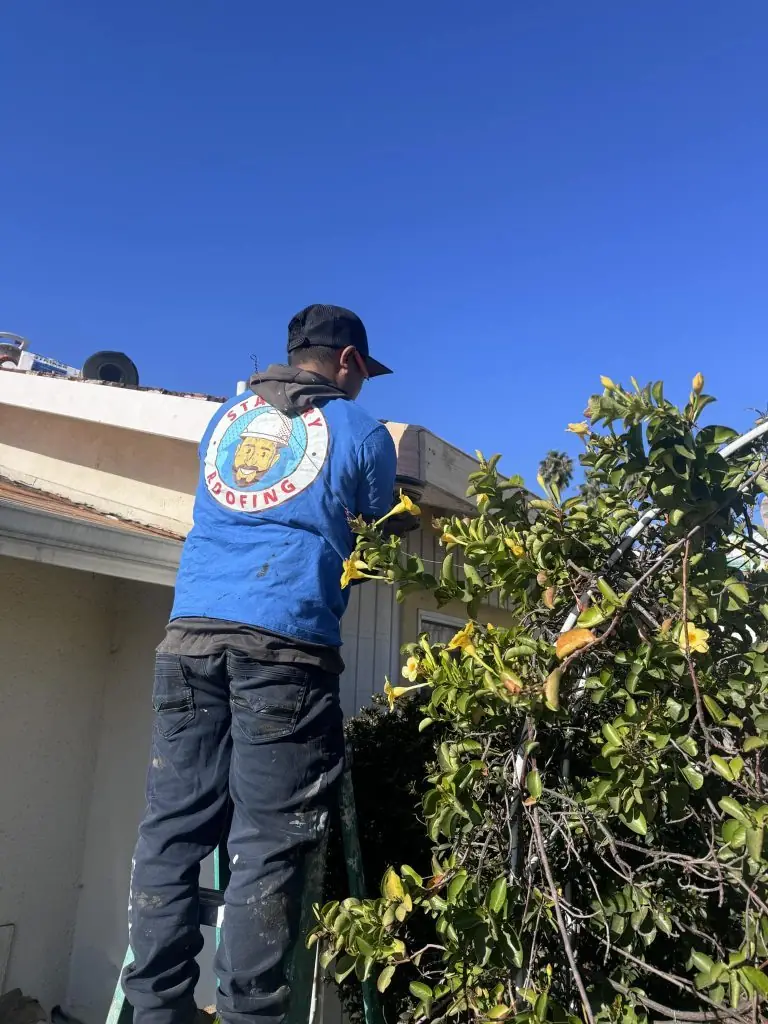
We never quote fascia repairs from the ground. Our inspection includes ladder access to examine all fascia boards up close, moisture meter testing to identify hidden water damage in wood, soffit inspection to check for related deterioration, gutter system evaluation for proper pitch and drainage, roof edge examination for proper flashing and drip edge, and rafter tail assessment where accessible.
This thorough inspection typically reveals issues beyond what’s visible from ground level. We document everything with photos and provide you with a detailed report.
Step 2: Damage Assessment and Scope Determination
Based on our inspection findings, we categorize damage into repair zones: sections requiring only surface preparation and repainting, areas needing partial board replacement (cutting out damaged sections), sections requiring complete board replacement, and locations where damage has extended to soffits, rafter tails, or roof decking.
This assessment allows us to provide an accurate scope and cost estimate rather than discovering additional damage mid-project.
Step 3: Material Selection and Preparation
We discuss material options with you based on the extent of damage and your long-term maintenance preferences.
For partial replacements, we match existing wood species and dimensions (typically 2×6 or 2×8 cedar, redwood, or pine).
For complete replacements, we present upgraded options including rot-resistant wood species, PVC boards that never rot, fiber cement boards for maximum durability, composite boards made from recycled wood and plastic, or aluminum fascia covers over existing wood.
All wood materials are pre-treated with wood preservative and pre-primed before installation.
Step 4: Precise Removal and Repair
Gutter sections are carefully removed and set aside (inspected for damage and cleaned).
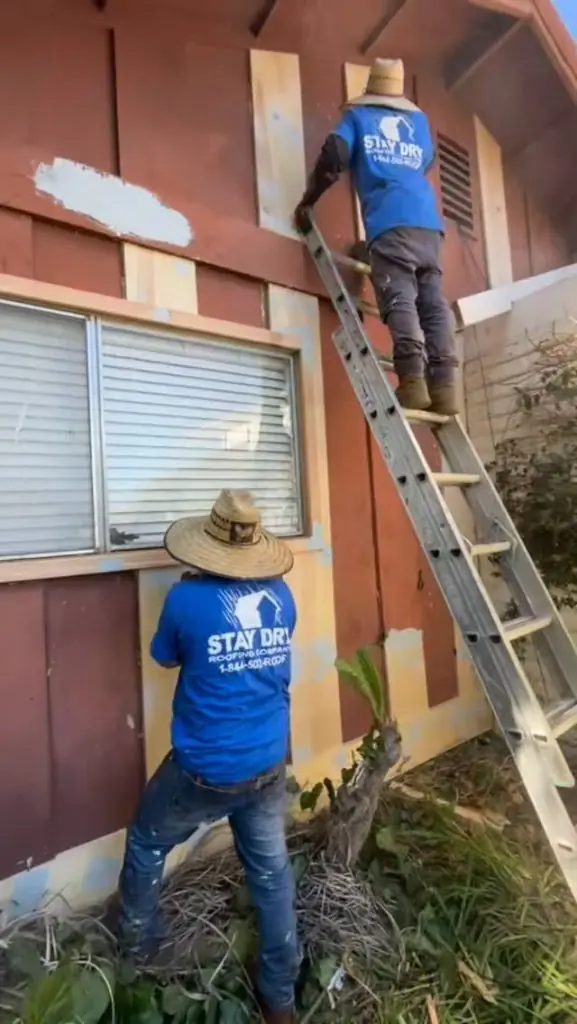
Damaged fascia boards are cut and removed using techniques that minimize impact on the roof structure.
If rot has extended into rafter tails, these are cut back to solid wood and sistered (reinforced) with new lumber.
The exposed roof edge receives new drip edge flashing if missing or damaged. Soffit boards are repaired or replaced if affected.
All work maintains proper ventilation paths for attic airflow.
Step 5: Expert Installation
New fascia boards are precisely measured and cut with proper miter joints at corners.
Boards are secured with hot-dipped galvanized 16d nails or corrosion-resistant screws.
All joints are sealed with exterior-grade wood glue and caulk to prevent water infiltration.
Proper gap spacing is maintained for materials that expand/contract with temperature changes.
Boards are checked for level and plumb appearance before final fastening. End cuts and all exposed wood receive extra sealer coats for protection.
Step 6: Weatherproofing and Finishing
All nail holes and joints are filled with exterior wood filler. Surfaces are sanded smooth to create a uniform finish.
Wood receives two coats of premium exterior primer. Finish painting includes two coats of high-quality exterior paint matched to your home’s color scheme.
All joints and seams receive additional caulk for weatherproofing. We use UV-resistant paints specifically formulated for California’s intense sun exposure.
Step 7: Gutter Reinstallation and Integration
Gutters are reattached with new hangers at proper spacing (every 18–24 inches).
Gutter pitch is verified to ensure proper drainage toward downspouts.
All gutter seams and joints are sealed. Downspouts are reconnected and tested.
Final inspection ensures gutters are secure and properly supported by the new fascia.
Step 8: Final Inspection and Documentation
We conduct a final inspection from ground level and ladder access to verify all work meets our quality standards. Photos document the completed repair.
We review any maintenance recommendations with you. All debris is removed and the work area is cleaned.
You receive warranty documentation for materials and labor.
The entire process typically takes 1–3 days depending on the extent of repairs. We work efficiently while maintaining the quality standards that have earned us our reputation in Mission Viejo.
Fascia Board Material Options: Choosing the Right Solution for Your Home
One of the most important decisions in fascia repair is selecting the right material. While many contractors simply replace damaged fascia with the same wood species that was originally used, this approach often leads to recurring problems if the underlying conditions that caused the damage haven’t changed. Here’s a comprehensive comparison of your options:
Traditional Wood Fascia (Cost: $1–$3 Per Linear Foot for Material)
Materials
Cedar, redwood, pine, spruce, or fir in 2×6 or 2×8 dimensions
Advantages
Most affordable initial material cost, natural appearance, easy to work with, matches original construction, can be painted any color.
Disadvantages
Requires regular maintenance (painting every 5–7 years), susceptible to rot, vulnerable to insects, limited lifespan (15–20 years), warps/splits from thermal cycling.
Best For
Homeowners on a budget, historic preservation, situations where partial replacement needs to match existing wood fascia.
Pressure-Treated Wood (Cost: $2–$4 Per Linear Foot for Material)
Materials
Pine or fir lumber treated with chemical preservatives, typically rated for ground contact
Advantages
Better rot and insect resistance than untreated wood, longer lifespan (20–25 years), more affordable than premium alternatives.
Disadvantages
Still requires regular painting and maintenance, heavier, may not be as aesthetically pleasing as clear wood, vulnerable to UV damage.
Best For
Replacing sections where moisture exposure is unavoidable, budget-conscious homeowners wanting better longevity than standard wood.
PVC Fascia Boards (Cost: $3–$7 Per Linear Foot for Material)
Materials
Solid polyvinyl chloride (PVC) plastic manufactured to mimic wood appearance
Advantages
Completely rot-proof and moisture-impervious, never requires painting, excellent insect resistance, very long lifespan (30–40+ years), low maintenance.
Disadvantages
Higher material cost, expands and contracts more than wood (requires special installation), limited paint adhesion if color change is desired, some find appearance too “plastic.”
Best For
Homeowners wanting minimal maintenance, high-moisture areas where rot is chronic, replacement projects where longevity matters more than initial cost.
Fiber Cement Fascia Boards (Cost: $4–$8 Per Linear Foot for Material)
Materials
Composite of cement, sand, and cellulose fibers pressed and cured into boards
Advantages
Excellent rot resistance, fire-resistant (Class A rating), very durable, long lifespan (30–50 years), holds paint exceptionally well (repaint every 10–15 years).
Disadvantages
Expensive material cost, very heavy (higher labor cost), generates hazardous dust when cut (requires specialized techniques), can crack if impacted hard.
Best For
Homes with fiber cement siding, homeowners prioritizing maximum durability and fire resistance, high-end replacement projects, areas where paint longevity is important.
Composite Fascia Boards (Cost: $5–$9 Per Linear Foot for Material)
Materials
Recycled wood chips, sawdust, and plastic bonded with epoxy resins
Advantages
Excellent rot resistance, good dimensional stability (resists warping), environmentally friendly, long lifespan (25–35 years), low maintenance, similar working properties to wood.
Disadvantages
Higher cost than wood, may fade over time in intense sun exposure, limited color options in some formulations, heavier than wood.
Best For
Environmentally conscious homeowners, homes with composite decking, balance between wood aesthetics and synthetic durability, moderate-maintenance solutions.
Aluminum Fascia Covers (Cost: $3–$5 Per Linear Foot for Material Plus Labor)
Materials
Aluminum coil stock bent to fit over existing wood fascia boards
Advantages
Protects existing wood fascia from weather, virtually zero maintenance (never needs painting), very long lifespan (40+ years), fast installation.
Disadvantages
Does not repair damaged fascia (only covers it), can dent from impacts, thermal expansion can cause oil-canning (wavy appearance), requires professional installation.
Best For
Protecting recently repaired or new wood fascia, restoration where wood must be retained underneath, homeowners wanting zero-maintenance solutions.
Recommendations for Mission Viejo Homes
Based on our climate and the typical architecture of Mission Viejo homes, we most frequently recommend:
For budget-conscious repairs: Cedar or redwood (naturally rot-resistant species) with proper sealing and painting.
For best value long-term: PVC fascia boards (high initial cost but 30–40 year lifespan with zero maintenance).
For matching existing construction: Wood species matching what’s currently on your home, with upgraded sealing and UV-protective paint.
For maximum durability: Fiber cement boards (especially if you already have fiber cement siding).
For environmental concerns: Composite boards made from recycled materials.
For ultimate protection: New wood fascia protected with aluminum covers (combines natural substrate with weatherproof shell).
We’ll discuss your specific situation—including budget, maintenance preferences, how long you plan to stay in your home, and aesthetic priorities—to recommend the best solution.
The Mission Viejo Advantage: Why Local Expertise Matters
Fascia repair isn’t one-size-fits-all work, and expertise with Mission Viejo’s specific conditions makes a significant difference in outcomes. Here’s what local knowledge provides:
HOA Compliance Knowledge: Many Mission Viejo neighborhoods have architectural guidelines that restrict materials, colors, and modifications. We’re familiar with common HOA requirements and can ensure your fascia repairs meet these standards without requiring special approval processes that delay your project.
Spanish Mission Architecture Expertise: The decorative fascia boards and exposed rafter tails common in Mission Viejo’s Spanish mission-style homes require specialized carpentry skills. We understand proper proportions, traditional details, and finishing techniques that maintain architectural authenticity while using modern materials for improved durability.
Climate-Specific Materials and Techniques: Not all paints, sealers, and fasteners perform equally in Southern California’s UV-intense, low-humidity environment. We use products specifically formulated for our climate—UV-resistant paints, flexible sealants that won’t crack in heat, and corrosion-resistant fasteners that won’t rust or stain.
Permit and Inspection Requirements: Most fascia repairs in Mission Viejo don’t require building permits, but certain extensive replacements involving structural repairs do. We know when permits are required and handle all necessary documentation and inspections, ensuring your work meets California building codes and Title 24 requirements where applicable.
Local Availability and Fast Response: As Mission Viejo-based contractors, we maintain relationships with local suppliers, which means we can source materials quickly without waiting for special orders or shipping delays. When your fascia fails during a winter storm, we can typically respond within 24–48 hours rather than having you wait a week while we schedule around projects in distant cities.
Understanding Mission Viejo’s Microclimates: Homes in the valleys near Mission Viejo can experience different moisture exposure than hilltop properties. Neighborhoods with mature tree cover have different fascia challenges than newly developed areas with minimal shade. We account for these microclimate differences in our material recommendations and finishing techniques.
Mission Viejo, CA – As a third-generation family roofing business proudly serving Orange County for decades, we are excited to announce a renewed commitment to our community in 2026.
Frequently Asked Questions: Fascia Board Repair in Mission Viejo
How much does fascia board repair cost in Mission Viejo?
Cost depends entirely on the extent of damage and the scope of work. Surface repairs (cleaning, sealing, repainting) on intact boards typically run $300-$800 for an average home. Partial board replacement (cutting out and replacing damaged sections) costs $800-$2,500, depending on linear footage. Complete fascia replacement around a typical single-story home ranges from $2,500-$6,000 for standard wood to $4,000-$9,000 for premium materials like PVC or fiber cement. If damage has extended to roof decking, rafter tails, or soffits, costs increase accordingly. We provide free inspections and detailed written estimates that itemize all costs before we begin any work.
Can I just paint my fascia boards, or do they need replacement?
This depends on the condition of the underlying wood. If fascia boards are structurally sound with no rot, cracks, or soft spots—and paint failure is the only issue—then proper surface preparation and repainting can extend their life by 10-15 years at a fraction of replacement cost. However, if wood has rotted, crumbled, or become spongy, painting provides only cosmetic improvement while the deterioration continues underneath. During our free inspection, we use moisture meters and physical examination to determine whether paint alone is sufficient or replacement is necessary. Many homeowners discover they can refinish the street-facing fascia while replacing only the sun-exposed or weather-damaged sections on other sides of the home.
How long does fascia board repair take?
Timeline varies with scope: Simple refinishing work on intact boards takes 1-2 days. Partial board replacement (20-40 linear feet) typically requires 2-3 days. Complete fascia replacement around a single-story home takes 3-5 days. Two-story homes or homes with complex rooflines may require 5-7 days. Extensive repairs involving roof decking or rafter tails can take 7-10 days. These timelines assume good weather—we cannot work during rain or extremely windy conditions that make ladder work unsafe. We schedule projects to minimize disruption and keep you informed of progress throughout.
What's the difference between fascia and soffit, and do both need repair?
Fascia is the vertical board running along the roof edge where gutters attach. Soffit is the horizontal board underneath the roof overhang between the fascia and your exterior wall. These components work together: the fascia provides structural support and weather protection at the roof edge, while the soffit seals the underside of the overhang and provides ventilation for your attic. Damage often affects both: Water that infiltrates behind fascia frequently damages soffit boards. Gutter overflow impacts both fascia and soffit simultaneously. Pest entry through damaged fascia often leads to soffit damage from nesting. During inspection, we examine both systems because repairing fascia while ignoring damaged soffit is incomplete work that leaves your home vulnerable. Many projects include both fascia and soffit replacement for complete protection.
Is fascia repair covered by homeowners' insurance?
Insurance coverage depends on the cause of damage. Typically covered: Sudden storm damage (wind, falling trees), fire damage, vandalism. Typically not covered: Gradual deterioration from age and wear, rot from deferred maintenance, insect damage, cosmetic issues. If winter storm damage leads to fascia failure, document the damage with photos immediately and file a claim promptly. We can work directly with insurance adjusters, provide detailed damage reports, and submit estimates for insurance approval. Even if insurance doesn't cover the full repair, addressing fascia damage promptly prevents additional damage that insurance definitely won't cover—such as interior water damage, mold growth, or structural deterioration from neglect.
Can I repair fascia boards myself, or should I hire a professional?
While DIY fascia repair is possible for experienced homeowners with carpentry skills, several factors make professional service advisable: Safety concerns (working from ladders at roof height carries significant fall risks), diagnostic expertise (identifying hidden damage that simple visual inspection misses), specialized tools and materials (quality work requires table saws, miter saws, moisture meters, and proper fasteners), structural knowledge (understanding how fascia integrates with roof framing, gutters, and drainage), finishing expertise (achieving weather-tight seals and professional paint finishes that last), and warranty protection (professional work comes with warranties on both materials and labor). For small, accessible repairs on ground-floor overhangs, capable homeowners might tackle the work. For any substantial repair, second-story work, or situations where rot may have spread beyond visible areas, professional service provides far better outcomes with lower risk.
What causes fascia boards to rot in Mission Viejo?
Several factors contribute to fascia rot in our climate: Chronic moisture exposure (clogged gutters overflow onto fascia, leaking gutters drip water directly onto boards, missing or damaged drip edge allows water to run behind fascia, inadequate roof overhang provides insufficient weather protection), UV degradation (intense sun breaks down paint and sealants, checking in exposed wood allows moisture penetration, bare wood exposed by paint failure absorbs water readily), architectural vulnerabilities (exposed rafter tails common in Spanish mission styles create entry points, decorative fascia profiles trap water in crevices, complex rooflines concentrate water flow at corners and valleys), and maintenance neglect (infrequent painting allows moisture infiltration, accumulated debris holds moisture against wood, uncleared gutters cause overflow). Mission Viejo's climate cycle—dry summers followed by concentrated winter rainfall—means fascia that dries out and cracks during summer absorbs water rapidly when winter rains arrive, accelerating rot.
How often should fascia boards be inspected?
We recommend annual fascia inspections as part of routine home maintenance, ideally in late fall before winter rains begin. During inspection, look for paint condition (peeling, cracking, chalking), wood integrity (soft spots, cracks, discoloration), gutter attachment (secure or pulling away), moisture signs (stains, mold, algae), pest activity (holes, droppings, sawdust), and structural alignment (sagging or pulling away from the roof). Additionally, inspect after any severe weather event—strong winds, heavy storms, falling branches—that might have caused damage. Catching problems early at the paint-failure stage costs hundreds to repair; waiting until structural failure occurs costs thousands. Annual inspection is an inexpensive prevention against expensive emergency repairs.
Do new fascia boards come with a warranty?
Yes, both material and labor warranties apply. Material warranties: Wood fascia boards typically have 1-year material defect warranties. PVC, fiber cement, and composite boards often carry 20-25 year material warranties. Aluminum fascia covers usually have 30-50-year finish warranties. These manufacturer warranties cover defects in the material itself. Labor warranties: At Mission Viejo Roofing, we provide a 5-year labor warranty on all fascia repair work, covering installation quality, weatherproofing integrity, and paint adhesion (where applicable). This means if the fascia boards we installed fail due to installation issues within five years, we will repair or replace them at no charge. Normal wear and tear, subsequent damage from external causes, or failures due to improper maintenance are not covered by labor warranty, but material warranties may still apply. We provide all warranty documentation in writing.
Protect Your Home’s Roofline: Schedule Your Free Fascia Inspection
Your fascia boards are your roof’s first line of defense against weather damage, pest infiltration, and structural deterioration. In Mission Viejo’s climate, where intense sun and concentrated winter rainfall create the perfect conditions for fascia damage, regular inspection and prompt repair aren’t optional—they’re essential home maintenance that protects your investment.
At Mission Viejo Roofing, we’ve built our reputation on quality craftsmanship, honest assessments, and transparent pricing.
We won’t recommend replacement if proper repair will solve the problem.
We won’t quote prices from the ground—we inspect up close and provide accurate, detailed estimates.
We’ll explain your material options, timeline, and costs clearly so you can make informed decisions.
Whether you’ve noticed peeling paint, sagging gutters, or just want the peace of mind that comes from professional inspection, we’re here to help.
Call us today to schedule your free fascia board inspection. We serve all Mission Viejo neighborhoods and surrounding communities with the local expertise, quality materials, and skilled craftsmanship your home deserves.
Join our mailing list to receive updates, roofing tips, and special offers from our trusted team. Keep your home protected with the latest from Mission Viejo Roofing.