Serving Mission Viejo for 30+ Years
Expert Solar-Ready Roofing & Panel Integration | Mission Viejo Roofing Serving Mission Viejo, CA | Licensed & Insured (C-39) | Solar + Roofing Expertise
Most Mission Viejo homeowners approach solar installations from an energy perspective—calculating kilowatt-hours, comparing panel efficiencies, and analyzing utility bill savings. That’s understandable. Solar companies excel at selling you on the financial benefits of solar energy. What they often overlook is the fundamental truth that solar panels don’t float in mid-air—they attach to your roof.
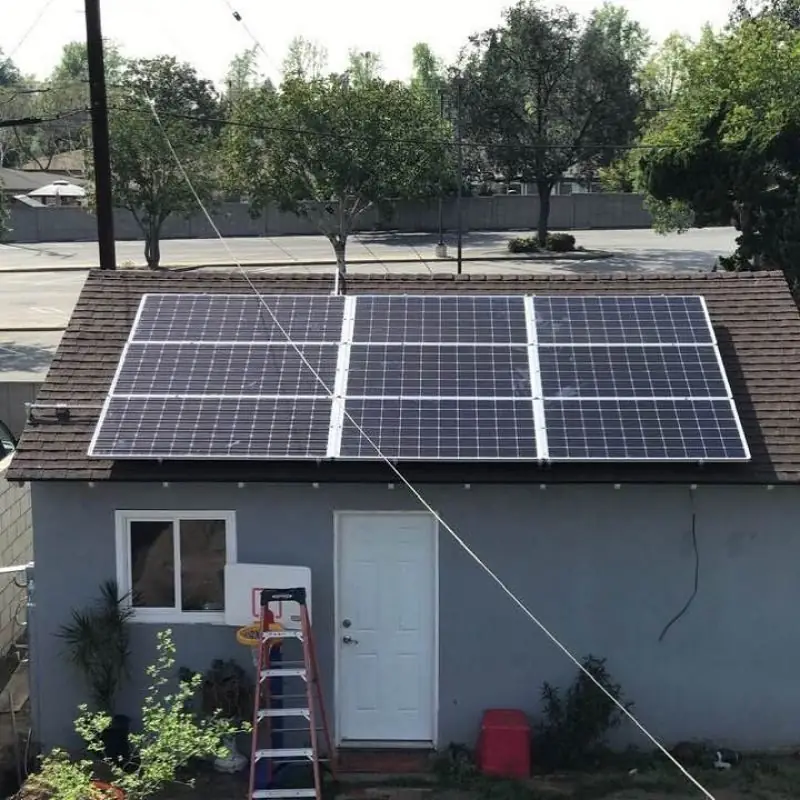
Your roof is the foundation for your solar investment. A 25-year solar system warranty means nothing if your roof needs replacement in year 10, forcing you to pay thousands in panel removal, roof replacement, and panel reinstallation. Improper solar installation can void roofing warranties, create leak points that cause tens of thousands in interior damage, and accelerate roof deterioration through concentrated load stress and blocked drainage paths.
At Mission Viejo Roofing, we approach solar from a roofer’s perspective. We’ve witnessed the aftermath of solar installations gone wrong:
This page isn’t about selling you solar panels—numerous qualified solar companies in Mission Viejo can do that. This page is about ensuring your roof is ready for solar, protecting your roofing investment during installation, and making informed decisions about the relationship between your roof and your solar aspirations.
Mission Viejo offers ideal conditions for residential solar power generation. Understanding these factors helps you make informed decisions about whether solar makes sense for your home.
Mission Viejo receives approximately 283 sunny days annually with an average of 5.7 peak sun hours per day—higher than the California average of 5.4 hours. This translates to substantial energy production:
Southern California Edison (SCE), the primary utility serving Mission Viejo, charges some of the highest residential electricity rates in California.
Solar installations increase home values in Mission Viejo’s competitive real estate market.
A typical 8kW residential solar system offsets approximately 10,000–12,000 pounds of $\text{CO}_2$ emissions annually—equivalent to planting $150+$ trees each year.
Solar panels and roofing systems have an intimate, 25-30 year relationship. Ignoring this relationship costs homeowners thousands in preventable expenses. Here’s what you need to know before signing a solar contract.
Solar panel systems carry 25-30 year warranties and lifespans, but most Mission Viejo roofs don’t last that long:
If your roof needs replacement within 10 years, you should address it before installing solar panels. Removing and reinstalling panels for a later re-roof costs between $1,500 and $6,000 (or approximately $150–$300 per panel). This expense is entirely avoidable with proper pre-solar planning.
Many Mission Viejo homes feature Spanish mission architecture with clay or concrete tile roofs. These roofs present unique challenges for solar installation that generic solar companies often handle poorly:
Understanding mounting mechanics helps you evaluate installation quality and ask contractors informed questions.
Most solar panels use racking systems that penetrate the roof surface:
Mission Viejo’s Santa Ana winds (sustained 40+ mph with gusts to 60+ mph) place extreme stress on improperly mounted systems. We’ve seen solar arrays with mounting feet that pulled partially out during windstorms because they weren’t secured into rafters or used insufficient fasteners.
Products like Tesla Solar Roof, GAF Timberline Solar, and CertainTeed Solstice replace traditional roofing materials:
Solar mounting feet must anchor into roof rafters—the structural framing members typically spaced 16–24 inches apart. Mounting into only roof sheathing (the plywood deck) creates weak attachment points that fail under wind loads.
Many installers use inadequate methods to locate rafters, resulting in mounting feet secured only into sheathing. In Mission Viejo’s wind conditions, this is a disaster waiting to happen.
Every roof penetration is a potential leak point. Proper solar flashing requires:
We routinely see installations where flashing is simply caulked around the mounting foot with no proper metal flashing, sealants are applied incorrectly or in insufficient quantities, or penetrations are placed in roof valleys or other critical drainage areas.
Spanish mission-style tile roofs require specialized handling. Concrete and clay tiles are brittle and crack easily under foot traffic. Proper tile roof work requires:
Solar installers without roofing experience frequently damage dozens of tiles during installation. We’ve assessed systems where 30–50 tiles cracked during installation—a $500–$1,500 repair cost the homeowner discovers months later when roof leaks develop.
Roof valleys—the V-shaped channels where two roof planes meet—concentrate water flow and are critical drainage paths. Placing solar panels too close to valleys or directly over valley areas blocks water flow, causing:
Mission Viejo’s concentrated winter rainfall (14 inches across just 37 days) means valleys handle substantial water volumes during storms. Blocked drainage can quickly cause serious damage.
Solar installations that block ventilation paths (ridge vents, soffit vents) cause:
Proper solar design accounts for existing ventilation and maintains airflow paths. Many installers treat ventilation as an afterthought, if they consider it at all.
If you’re planning solar installation within the next 1–3 years, investing in “solar-ready” roofing provides substantial benefits. This approach involves installing or upgrading your roof with solar installation in mind, even if panels won’t be installed immediately.
If you need roof replacement and plan future solar installation, we recommend this approach:
STEP 1: SOLAR SYSTEM PRE-DESIGN Even if you’re not installing panels immediately, have a solar company create a preliminary system design showing planned panel placement, mounting locations, and electrical paths. This design informs roofing decisions.
STEP 2: COORDINATED ROOF REPLACEMENT
STEP 3: PROVIDE DOCUMENTATION TO FUTURE SOLAR INSTALLER When you’re ready for solar, provide your solar company with:
This preparation reduces solar installation costs (installers spend less time investigating roof structure), eliminates surprises during installation, ensures proper mounting into rafters, and reduces leak risks by allowing optimized mounting locations.
Homeowners considering solar often ask about the relative merits of traditional solar panels versus solar roof tiles (Building-Integrated Photovoltaics or BIPV). From a roofing standpoint, each has distinct advantages and challenges.
| Aspect | Advantages (Roofing Focus) | Challenges (Roofing Focus) |
| Maintenance | Roof replacement is easier—panels remove completely, allowing full roof access. | Removal for roof maintenance costs $2,000–$5,000+. |
| Compatibility | Works with any roofing material (tile, shingles, metal, flat membrane). | Every mounting foot creates a roof penetration and potential leak point. |
| Repair | Roof repairs under panels are possible without replacing expensive solar tiles. | Panel arrays block roof inspection and maintenance access. |
| Material Impact | Existing roofing materials remain intact under panels, providing redundant weatherproofing. | Mounting hardware can accelerate roofing material deterioration through thermal cycling and stress concentration. |
Cost from Roofing Perspective:
Traditional panel systems are significantly less expensive ($20,000–$35,000 for typical installations) and don’t require roof replacement if your existing roof is in good condition. However, you must factor in future panel removal/reinstallation costs if roof replacement will be needed during panel lifespan.
Popular Products: Tesla Solar Roof, GAF Timberline Solar, CertainTeed Solstice, Luma Solar
| Aspect | Advantages (Roofing Focus) | Challenges (Roofing Focus) |
| Waterproofing | Solar tiles are the roof—no separate mounting system creating penetrations. | Complete roof replacement required—can’t retrofit on existing good roofs. |
| Installation | All roof flashing, valleys, hips, and edges use standard roofing techniques. | Tile replacement for repairs is more complex than conventional roofing tiles. |
| Aesthetics | Eliminates aesthetic impact of rack-mounted panels (seamless appearance). | Electrical integration increases roof complexity. |
| Modifications | Tiles integrate with conventional roofing around non-solar areas. | Roof modifications (adding dormers, skylights) become more complicated. |
Cost from Roofing Perspective:
Solar roof tiles cost substantially more ($50,000–$160,000 for complete installations), but when roof replacement is needed, the cost comparison narrows significantly. Instead of paying $15,000 for a new roof + $25,000 for solar panels ($40,000 total), you pay $50,000–$80,000 for an integrated solar roof. If you need a roof replacement anyway, the incremental cost is more reasonable.
Mission Viejo’s Spanish mission architectural style often makes solar tiles particularly appealing—they maintain the clean, elegant rooflines that define these homes while providing solar benefits.
Understanding solar economics requires looking beyond simple payback period calculations. Your roof’s condition dramatically impacts the true cost-benefit equation.
| Metric | Cost Range (Before ITC) | Cost Range (Net After 30% ITC) |
| System Size | 8kW (typical) | 8kW (typical) |
| Gross Cost | $19,120 – $27,920 ($2.39/watt average) | |
| Federal Tax Credit (30% ITC) | -$5,736 to -$8,376 | |
| Net Cost after Federal Incentive | $13,384 – $19,544 |
Additional Costs to Consider:
Savings and Payback:
| Metric | Cost Range (Before ITC) | Cost Range (Net After 30% ITC) |
| System Size | 8kW integrated with complete roof replacement | |
| Gross Cost | $50,000 – $85,000 | |
| Federal Tax Credit (30% ITC) | -$15,000 to -$25,500 | |
| Net Cost after Federal Incentive | $35,000 – $59,500 |
Cost Comparison Components:
Savings and Payback:
Additional Value Consideration: Solar roof tiles may command slightly higher property value premiums (e.g., $4.1\%$ vs $3.7\%$ for traditional panels).
Here’s where the economics fundamentally change:
| System Type | Initial Cost (Net) | Mid-Life Costs (Year 12) | Total Cost Over 25 Years |
| Traditional Panels | $13,384–$19,544 | New Roof ($15k–$25k) + R&R Panels ($4k–$10k) | $32,384–$54,544 |
| Solar Roof Tiles | $35,000–$59,500 | Zero mid-life costs | $35,000–$59,500 |
The scenarios are comparable in total cost, but solar tiles avoid the disruption, risk, and coordination hassles of mid-life panel removal and reinstallation.
Understanding available incentives is critical for maximizing your solar investment’s financial returns.
| Status/Requirement | Details |
| Current Status | 30% tax credit for solar installations completed before December 31, 2025. |
| Critical Warning | Congressional proposals in 2025 threaten to eliminate this credit after 2025. |
| How It Works | Reduces federal income tax liability dollar-for-dollar. For a $25,000 system, you receive $7,500 off your federal taxes. Unused credit carries forward to future years. |
| Eligibility | Applies to purchased systems (cash or financed), but NOT to leased systems or Power Purchase Agreements (PPAs). Covers all system costs including solar roof tiles. |
Strategic Timing: If this incentive is eliminated after 2025, the economics of solar installation will fundamentally change, dramatically extending payback periods.
What This Means for Mission Viejo Homeowners: Selling excess solar power back to the grid is no longer as lucrative. The optimal strategy is to install battery storage to capture solar energy during the day and use it during evening peak rate periods when electricity costs are highest.
While SCE doesn’t offer direct cash rebates for residential solar, they provide:
At Mission Viejo Roofing, we approach solar-integrated roofing projects with careful coordination, whether you’re preparing a roof for future solar or integrating panels during roof replacement.
Solar panels add complexity to roof maintenance. Homeowners must balance the need for regular roof inspections with the challenges of accessing roofs covered with panels.
Your roof doesn’t stop requiring maintenance just because it’s covered with solar panels. We recommend annual inspections focusing on:
Many solar companies offer free annual inverter inspections but don’t examine roofing components. We’ve discovered roof problems during routine inspections that would have cost thousands if left unaddressed.
When leaks develop in panel-covered areas:
This is why proper initial installation is so critical—fixing problems later is expensive and complicated.
Solar panels create new maintenance considerations:
Plan for professional roof cleaning every 1–2 years even if you previously cleaned less frequently.
While this isn’t strictly roofing work, panel cleaning affects roof access:
If your roof is within 10 years of needing replacement, yes. Here's why: Solar panels last 25–30 years, but most roofs don't. Asphalt shingles in Mission Viejo typically last 20–25 years; Spanish tile underlayment needs replacement every 20–25 years. If you install panels on an aging roof, you'll pay $4,000–$10,000 to remove and reinstall them for roof replacement, which significantly erodes your solar savings. It's far more economical to replace the roof first.
Only if installed improperly by inexperienced crews. Spanish tile roofs require specialized installation techniques: proper tile walking (stepping only on supported areas), use of tile hooks, specialized mounting systems, and proper flashing that integrates with tile layers. We recommend inspecting any solar installation on tile roofs within 30 days to verify tile integrity and flashing quality.
Plan on $4,000-$10,000 depending on system size and complexity. Breakdown: Panel removal (disconnection, unmounting, storing safely): $2,000-$5,000. Roof replacement (same cost as non-solar roof, but slightly complicated by mounting hardware): $0 incremental. Panel reinstallation (remounting, reconnection, inspection): $2,000-$5,000. Some solar installation contracts include discounted removal/reinstallation if you use the original installer (check your agreement). This expense is exactly why we strongly advocate addressing roof replacement before installing panels if your roof is within 10 years of needing work. A single removal/reinstallation cycle can cost more than the federal tax credit saves you.
In Mission Viejo and throughout California, HOAs cannot ban solar installations outright due to the Solar Rights Act (California Civil Code Section 714). However, HOAs can impose "reasonable restrictions" related to aesthetics and installation locations. What this means: HOAs can require panels on rear roof slopes not visible from streets. HOAs can mandate specific mounting systems or panel colors (typically black or blue). HOAs cannot reject installations that meet these aesthetic requirements. HOAs cannot require unreasonably expensive upgrades or force you to use specific contractors. If your HOA denies your solar application, we can help you navigate the approval process and ensure your installation complies with both HOA requirements and solar rights protections. Many Mission Viejo HOAs have solar installation guidelines available—request these before designing your system.
It depends on how panels are installed and what your warranty covers. Most roof warranties include clauses excluding damage caused by alterations or penetrations made after installation. Solar panel mounting creates dozens of roof penetrations, potentially voiding warranty coverage for leaks at those locations. However, proper installation by qualified professionals maintains warranty coverage: Have your roofer review the solar installation plan before work begins. Ensure the solar installer carries liability insurance covering roof damage. Document the roof condition before solar installation. Request that solar mounting includes enhanced waterproofing at all penetration points. Consider having your original roofing contractor inspect the solar installation to verify it meets their warranty requirements. Some roofing contractors (like us) offer warranty extensions covering solar integration work when we coordinate with the solar installer. This provides comprehensive protection for your entire roofing system even after solar installation.
From a pure solar integration standpoint, asphalt composition shingles are easiest to work with: Simple mounting systems, straightforward flashing, low cost for any needed repairs, and easy panel removal for roof work. However, asphalt shingles have the shortest lifespan (20-25 years in Mission Viejo), which creates the roof replacement timing problem discussed earlier. Spanish tile (concrete or clay) is common in Mission Viejo and works well with proper installation: Tiles last 40-50+ years, reducing concerns about roof replacement during panel life. Mounting systems are designed specifically for tile applications. Aesthetic integration is excellent. Requires experienced installers who understand tile roofing. Metal roofing is increasingly popular: Extremely long lifespan (40-60+ years)—outlasts solar panels. Very simple mounting (metal roof clamps often don't require penetrations). Lightweight material doesn't create structural concerns. Reflects heat, improving panel efficiency. Our recommendation: If you're replacing your roof specifically to install solar, consider metal roofing for its exceptional longevity. If your Spanish tile roof is in good condition, it's an excellent solar platform. Avoid installing panels on asphalt shingle roofs that are more than 10 years old.
Mission Viejo's climate creates both advantages and challenges: Advantages: 283 sunny days annually provide excellent solar energy production. Mild temperatures year-round mean less thermal stress on both panels and roofing. Low rainfall (14 inches annually) reduces water infiltration concerns. Challenges: Intense UV exposure degrades sealants and flashing faster than in northern climates—inspection and maintenance are critical. Santa Ana winds create extreme uplift forces on solar arrays—proper mounting into rafters is essential. Concentrated winter rainfall means storms deliver heavy water volumes in short periods—drainage paths around panels must be maintained. Minimal freezing means we don't get ice dam issues, common in northern states. Our installation techniques account for Mission Viejo's specific climate demands, using UV-resistant sealants, wind-rated mounting hardware, and drainage-conscious panel placement.
Yes, and flat roofs actually offer some advantages: Panels are mounted on tilted racks (typically 15-20 degrees) for optimal angle—you can orient all panels ideally regardless of roof direction. Mounting often uses ballasted systems (weighted blocks) with minimal roof penetrations—reducing leak risks. Panel arrays are completely hidden from street view—ideal for HOA-restricted neighborhoods. Maintenance access is easier than on sloped roofs. However, flat roofs present challenges: Ballasted systems require verification that the roof structure can handle the weight (30-50 pounds per square foot). Drainage around panel mounting must be carefully designed to prevent ponding water. Flat roof membranes (TPO, PVC, EPDM) have shorter lifespans (15-20 years) than sloped roofing—roof replacement timing becomes even more critical. We specialize in solar integration for flat roofs and can assess whether your roof structure is suitable for solar panel loading.
This is the question that makes proper initial planning so critical. If you need roof repairs under a few panels: Minor repairs might be possible by removing just the panels above the repair area ($500-$1,500). Extensive damage requires broader panel removal ($2,000-$5,000+). Some repairs can wait until your next planned roof maintenance cycle when panels would be removed anyway. If you need complete roof replacement: All panels must be removed (properly disconnected, unmounted, labeled, stored safely). Your roof gets completely replaced (same process as non-solar roof, though slightly more complex due to mounting hardware). Panels are reinstalled on the new roof (requires new mounting points, flashing, weatherproofing). System must be reinspected and approved before reconnection to the grid. Total timeline: 1-2 weeks depending on complexity. This is why we emphasize roof replacement before solar installation if your roof is within 10 years of needing work. One removal/reinstallation cycle costs $4,000-$10,000—sometimes more than the value of the panels themselves.
Yes, significantly. Multiple studies document solar premiums in California's real estate market: Average home value increase: 4.0-4.1% for homes with owned solar systems (not leased). For Mission Viejo's median home value (~$900,000), this represents $36,000-$37,000 in added value. Homes with solar sell faster: 20-30% shorter time on market compared to comparable non-solar homes. Buyer appeal: In neighborhoods with high solar adoption, non-solar homes are increasingly seen as outdated. Critical caveat: Leased solar systems or power purchase agreements (PPAs) don't provide the same value increase. Some buyers avoid homes with solar leases due to transfer complications and ongoing lease obligations. For maximum property value benefit, purchase your solar system outright (cash or financed loan that you pay off). Solar roof tiles may command slightly higher premiums (4.1% vs 3.7% for traditional panels in some markets) due to their seamless aesthetic integration, though this difference is still being studied.
Whether you’re considering solar installation, need a roof replacement, or want to prepare a solar-ready roof for future panel installation, we provide the roofing expertise that protects your investment and ensures successful solar integration.
Our approach is different:
We don’t sell solar panels (we’re not incentivized to rush you into solar before your roof is ready). We don’t pressure you toward expensive solar roof tiles if traditional panels on your existing roof make more sense. We don’t ignore roofing problems to make a solar sale happen.
What we do: Protect your roof, maximize your solar investment, ensure proper integration, and provide long-term support for your entire roofing system—solar panels included.
Call Mission Viejo Roofing today to schedule your solar roofing consultation. We’ll assess your roof, discuss your solar goals, provide clear recommendations about timing and approach, and answer all your questions about the relationship between your roof and your solar aspirations.
Mission Viejo Roofing – Licensed, Bonded & Insured (C-39)
Solar-Ready Roofing Experts Serving Mission Viejo Since [Year]
📞 Phone: (949)-528-7663
✉️ Email: ocstaydryroofing@yahoo.com
📍 Address: 26040 Acero Suite 202 Mission Viejo CA 92691
Your roof is the foundation of your solar investment. Let’s make sure it’s ready.
Join our mailing list to receive updates, roofing tips, and special offers from our trusted team.
Keep your home protected with the latest from Mission Viejo Roofing.
Thank you! We need your help. Would you share your experience on one of these sites?
If you have concerns you wish to address privately